

TechniqueAUGUST 11, 2026BY YANUME
Shooting Low-Light Events Without the Amateur Look
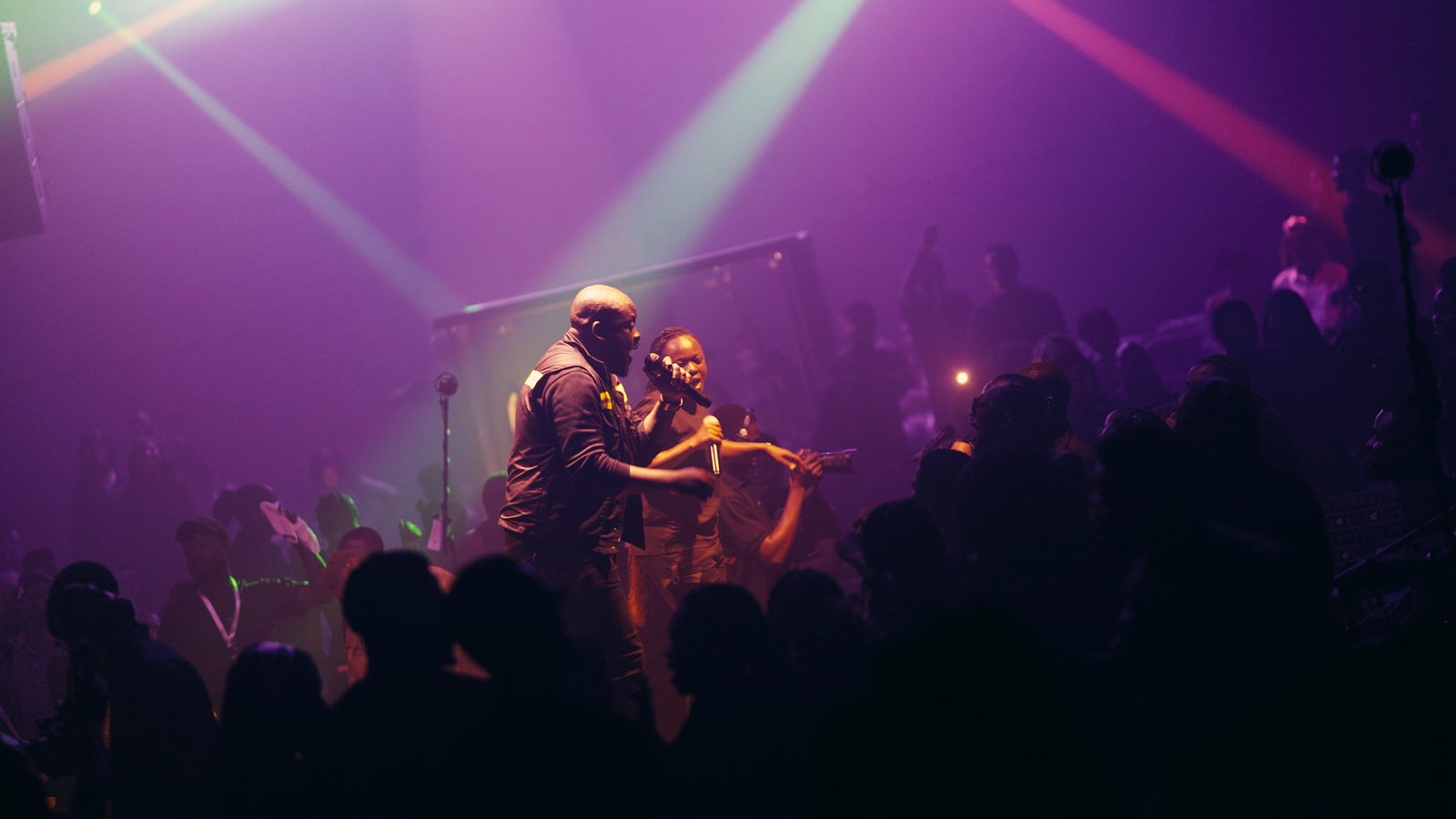
Low light and moving stage color is where amateur and professional event footage actually splits. Here's the lens, exposure, and color decisions that make the difference — with real frames from ADURA: NXT LEVEL.
Shooting Low-Light Events Without the Amateur Look
Every event videographer runs into the same night eventually: low ambient light, a couple of moving stage lights doing all the work, and a client who wants it to look cinematic, not like a phone recording from the back row. ADURA: NXT LEVEL was exactly that kind of night. Most of what makes low-light event footage look amateur or professional gets decided in this exact situation, before a single frame is graded.
Here's what actually causes the amateur look, and what fixes it.
The lens does more than the camera body
The single biggest lever in low light isn't ISO, it's aperture. A typical event zoom sits around f/2.8–f/4. A prime like the Sigma 85mm f/1.4 DG Art lets in two to four stops more light than that at the same shutter speed — which means the camera can sit at a dramatically lower ISO for the same exposure. That's the difference between clean footage and footage that needs heavy noise reduction, which is its own tell: over-smoothed skin and a slightly plastic look is one of the fastest ways low-light footage reads as amateur.
The tradeoff is depth of field — at f/1.4 on an 85mm, focus falls off fast, especially on a moving subject. That's a deliberate choice, not a limitation: a shallow plane of focus against a dark, chaotic background is part of what makes a single performer read as the subject instead of getting lost in the crowd.
ISO and sensor size aren't optional
The Canon R6's full-frame sensor holds up cleanly well past ISO 1000 in a way a lot of crop-sensor bodies simply don't.
In a room with practically no fill, protecting highlight detail on the one or two visible light sources is what keeps the image looking intentional instead of blown out and flat.
Shutter speed is a look, not just an exposure setting
This is the one most people get wrong in both directions. Locking shutter speed to the standard 180-degree rule (roughly double your frame rate — 1/50 at 24fps) gives natural, expected motion. But in a strobing, low-light stage environment, that same setting can also produce visible motion blur on fast movement, which most people assume is a mistake and try to eliminate entirely by cranking shutter speed up.
Don't default to eliminating it. One of the ADURA frames — a vocalist mid-lyric, blurred through the hands and mic — happened because the shutter speed stayed put instead of chasing a "sharper" image. Freezing everything perfectly in a low-light, high-energy room usually looks more sterile, not more professional. Motion blur used on purpose reads as energy. Motion blur from camera shake because you didn't stabilize reads as amateur. The difference is whether the blur is in the subject or in the whole frame.
Mixed color temperature will wreck auto white balance
Concert lighting rarely sits at one color temperature. Amber wash on one side, a cool purple key on the other, and auto white balance will hunt between them shot to shot, sometimes mid-clip. Locking white balance manually — even an imperfect fixed value — is more consistent than letting the camera guess, because consistency is what your eye actually reads as "graded" rather than "off."
More importantly: don't fight the color casts, direct them. The instinct to correct everything back to clean neutral white is usually the wrong instinct at a concert. The amber and purple in the ADURA stills aren't corrected out — they're leaned into and matched shot to shot, so the color becomes part of the storytelling instead of a problem to solve. That's a grading decision, but it starts with what you protect at the point of capture.
Expose for the grade, not for the preview
The temptation in a dark room is to brighten everything on the monitor until it looks "correct." That's usually the wrong call — it lifts noise into the shadows and leaves nothing to work with later. Expose to protect the brightest practical light sources in frame, accept that most of the frame will sit dark, and build the actual brightness and mood in the grade instead. This is where the colorist side of the job actually starts — before the shoot even wraps. Underexposed-but-clean footage can be graded into something intentional. Overexposed or noisy footage can't be un-broken.
What this actually looked like on ADURA
Most of the ADURA set is a version of this same problem: one or two colored stage sources, a dark room, moving subjects, zero control over the lighting rig. The Canon R6 and Sigma 85mm 1.4 combination is the technical answer — fast glass for the light, a sensor that holds up at higher ISO, in-body stabilization for handheld shots at slower shutter speeds. But the gear only closes half the gap. The other half is deciding, shot to shot, what to protect, what to let go dark, and which "mistakes" — like the motion blur — to keep.
If you're shooting events or concerts in Sunyani or anywhere in the Bono Region and low light is the thing making your footage look flat or noisy, this is usually a settings-and-decisions problem before it's a gear problem. Happy to talk through it if you're working on something similar.
— Yanume Effects, Sunyani, Ghana Visual Architect | We Engineer Desire.
low light videographyevent videographycinematographycolor gradingCanon R6Sigma 85mmSunyani videographer